A Modern Security Operating Model: A Unified Microsoft Security Blueprint for the AI Era
Instant access after form submission

The Challenge
Fragmented visibility makes modern security operations difficult to manage
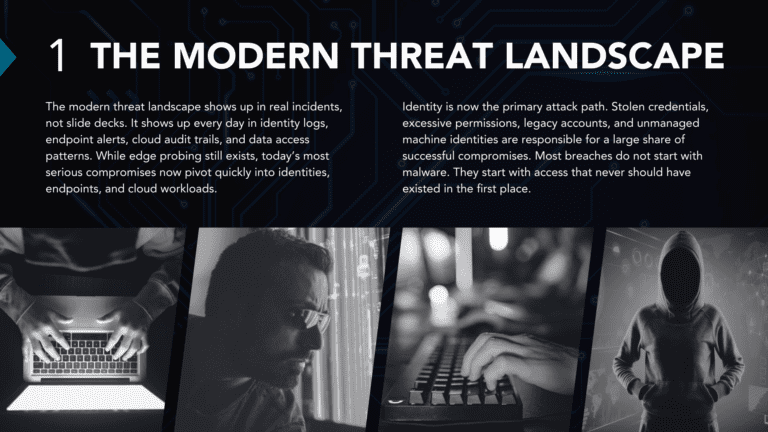
Today’s compromises show up in identity logs, endpoint alerts, cloud audit trails, and data access patterns. Attackers pivot fast across identities, endpoints, and cloud workloads, and fragmented tools make it harder to see the full story.
- Identity is the primary attack path, and breaches often begin with access that never should have existed
- Cloud risk increases with repeatable misconfigurations and inconsistent governance
- Sensitive data spreads across SaaS, storage, analytics, and AI workloads faster than teams can track
of breaches involve stolen or compromised credentials

What’s Inside This eGuide?
A practical operating model across Microsoft security pillars
This eGuide consolidates security priorities across Microsoft Defender, Defender for Cloud, and Microsoft Purview, aligned to Zero Trust, and built for modern operations and AI adoption.
- How the modern threat landscape actually plays out across identity, endpoints, and cloud
- How to run Microsoft 365 Defender as a single system across identity, endpoint, email, and SaaS
- How Defender for Cloud drives consistent posture management and workload protection across Azure, AWS, GCP, and hybrid
- How Purview supports AI readiness through classification, labeling, governance, and enforceable controls
- How Zero Trust functions as an operating model, not a checkbox
- An action roadmap focused on coverage gaps and enforcement, not more tools

The Business Impact of Fragmentation
Risk compounds when tools fragment context
Fragmented tools fragment understanding when teams need it most. Integrated platforms enable context, speed, and consistency, especially as AI becomes part of daily work.
of breaches involve stolen or compromised credentials
of cloud breaches stem from misconfiguration, not advanced exploits
of organizations admit they do not know where all sensitive data resides
If you can’t see identity risk, cloud exposure, and data access in one operating picture, prioritization turns into guesswork.

Who Should Read This?
Built for leaders accountable for outcomes
CIO / IT Director: Align security operations to business risk, not tool sprawl
CISO / Security Leader: Build a Zero Trust operating model across Microsoft platforms
Security Operations Manager: Reduce alert overload by unifying detection, correlation, and response
Cloud and Identity Owners: Close posture gaps and access drift across cloud and identities

Make the Microsoft security stack operate as a system
Microsoft’s portfolio supports this model when it’s configured and operated as a system across identity, device posture, detection, data governance, cloud security, and correlation.
ThreatDefender MXDR: Operationalize Microsoft Defender and Sentinel so security signals correlate into actionable incidents and faster response.
Microsoft 365 Defender Foundation: Align identity, endpoint, email, and SaaS telemetry into a unified incident view across the Microsoft security stack.
Defender for Cloud Enablement: Standardize cloud security posture management and workload protection across hybrid and multi-cloud environments.
Purview and AI Readiness: Apply classification, labeling, DLP, and governance to protect sensitive data as organizations adopt AI tools.
Zero Trust Security Assessment: Identify gaps between security policy and real-world enforcement and deliver an actionable Zero Trust roadmap.